Research summary:
MOLECULAR MECHANISMS INVOLVED IN THE TRAFFICKING OF THE IODIDE TRANSPORTER TO THE PLASMA MEMBRANE IN THE THYROID FOLLICULAR CELL
The ability of the thyroid follicular cell to accumulate iodide relies on the expression of the sodium iodide transporter (NIS) at the plasma membrane constituting the molecular bases for the diagnosis, treatment, and follow up of differentiated thyroid carcinoma and its metastases. The goal of the project is to characterize the molecular mechanisms that regulate NIS expression at the plasma membrane in the thyroid follicular cell under physiological conditions and to identify the causes that induce its internalization in differentiated thyroid carcinomas.
GENETIC DEFECTS CAUSING CONGENITAL HYPOTHYROIDISM DUE TO DEFECTIVE IODIDE ACCUMULATION IN THE THYROID FOLLICULAR CELL:
Iodide accumulation in the thyroid follicular cell is the first step in thyroid hormonogenesis. Mutations in the SLC5A5 gene, which encodes NIS, cause congenital hypothyroidism due to a defective iodide accumulation. The goal of the project addresses the genetic study of patients suspected of a defect in iodide transport by means of whole exome sequencing as a platform to understand the correlation between the structure and function of the protein and the folding that determines its traffic towards the membrane. plasmatic
MOLECULAR DIAGNOSIS OF THYROID CANCER USING MATERIAL FROM FINE NEEDLE ASPIRATION BIOPSIS OF THYROID NODULES:
Thyroid nodules are a frequent clinical problem and their clinical importance relies on the need to exclude thyroid cancer. The goal of the project is to develop economic, versatile and scalable diagnostic methodologies to determine the presence of thyroid cancer in the puncture material from thyroid nodules.
PARTICIPATION OF THE TOLL-LIKE RECEPTOR 4 (TLR4) IN THE PROCESS OF THYROID CARCINOGENESIS:
Thyroid cancer is the most common endocrine malignancy. Based on our previous observations showing the aberrant expression of TLR4 in thyroid tumors, the goal of the project is to elucidate the participation of the receptor and its endogenous ligands in the mechanisms involved in the abnormal growth of thyroid tissue and immune evasion, processes in part regulated by factors expressed and released by the tumor cell.
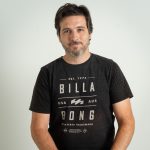
He did his doctoral thesis in the laboratory of Dr. Ana María Masini-Repiso studying the expression of Toll-like receptor 4 as a mediator of the effects induced by the bacterial endotoxin lipopolysaccharide in the thyroid follicular cell.
He did her postdoctoral work, first in 2016, by joining Dr. Nancy Carrasco’s lab (Yale School of Medicine). There, his work elucidated mechanistic questions about how the iodide transporter uses sodium to mediate the active accumulation of iodide in the thyroid cell and focused on identifying the residues involved in the coordination of sodium and iodide ions during the transport cycle. Then, in 2013, Dr. Nicola carried out a second postdoctoral experience under the direction of Dr. José Luis Bocco (FCQ-UNC). His work focused on elucidating the role of the tumour suppressor factor Kruppel-like 6 in carcinogenesis triggered by the loss of the p53 protein.
Since 2015 he has been a member of the CONICET Research Career, where he is currently an Independent Researcher at CIBICI. His work focuses on the study of the cellular and molecular biology of the thyroid follicular cell in the physiological and pathological context. He is a lecturer in the Department of Clinical Biochemistry FCQ-UNC, currently holding the position of Associate Professor.

She is a CONICET doctoral fellow under the direction of Dr. Juan Pablo Nicola. She is doing her PhD thesis at FCQ-UNC, addressing the topic: «Characterization of the signalling pathway triggered by TLR4 receptor activation in thyroid carcinomas: implications in the diagnosis and treatment of thyroid pathology».
She is a lecturer in the Department of Clinical Biochemistry FCQ-UNC, currently holding the position of Assistant Professor.
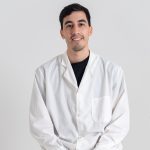
He is a doctoral fellow at the R&D&I Agency, under the direction of Dr. Juan Pablo Nicola. He is doing his PhD thesis at FCQ-UNC, addressing the topic: «Characterisation of molecular mechanisms that determine iodide accumulation in the thyroid follicular cell».

He is a FONCyT doctoral fellow, under the direction of Dr. Juan Pablo Nicola. He is working on his PhD thesis at FCQ-UNC, addressing the topic: «Advances in the personalised approach to thyroid cancer patients».
 Collaborators and Partners
Collaborators and Partners
-Dra. Ana Chiesa (Hospital de Niños Ricardo Gutiérrez, Buenos Aires).
-Dra. Mirta Miras (Hospital de Niños de la Santísima Trinidad, Córdoba).
-Dra. Nancy Carrasco (Vanderbilt University, Estados Unidos).
-Dr. Thierry Pourcher (Université Côte d’azur, Niza, Francia).
-Dra. Frédérique Savagner (Institut Fédératif de Biologie, Toulouse, Francia).
-Dra. Gertraud Orend (Hopital Civil, Strasbourg, Francia).
Selected Publications
Silent but Not Harmless: A Synonymous SLC5A5 Gene Variant Leading to Dyshormonogenic Congenital Hypothyroidism. Geysels et al. Front Endocrinol. 2022; 13:868891.
An Intramolecular Ionic Interaction Linking Defective Sodium/Iodide Symporter Transport to the Plasma Membrane and Dyshormonogenic Congenital Hypothyroidism. Bernal Barquero et al. Thyroid. 2022; 32(1):19-27.
Impact of the Mutational Landscape of the Sodium/Iodide Symporter in Congenital Hypothyroidism. Martín et al. Thyroid. 2021; 31(12):1776-1785.
The PDZ protein SCRIB regulates sodium/iodide symporter (NIS) expression at the basolateral plasma membrane. Martín et al. FASEB J. 2021; 35(8):e21681.
A Novel SLC5A5 Variant Reveals the Crucial Role of Kinesin Light Chain 2 in Thyroid Hormonogenesis. Martín et al. J Clin Endocrinol Metab. 2021; 106(7):1867-1881.
A Carboxy-Terminal Monoleucine-Based Motif Participates in the Basolateral Targeting of the Na+/I- Symporter. Martín et al. Endocrinology. 2019; 160(1):156-168.